
"Central America coffee market"
1000 article(s) found

Is Nicaraguan coffee sour? Nicaraguan coffee is characterized by the soft texture of Central America.
Professional coffee knowledge exchange more coffee bean information please follow the coffee workshop (Wechat official account cafe_style) front street-Nicaraguan coffee introduction Nicaraguan coffee has a very variety of flavors. Some of the Nicaraguan coffee is reminiscent of Mexican coffee, and some of it is reminiscent of the smell of Guatemala. But what they have in common is that it is rich in coffee with Nicaragua.

A brief introduction to the Market Price of Fine Coffee Bean varieties in Ireta Manor
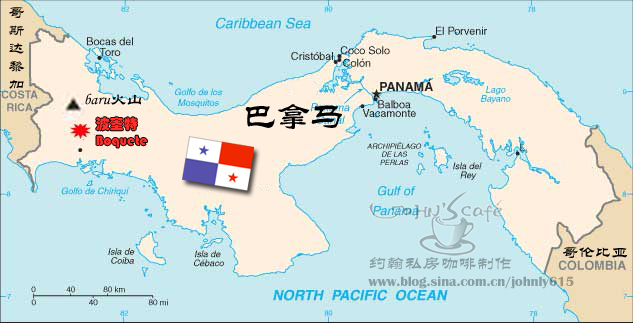
Central America is a long isthmus from northern Mexico to southern Colombia, connecting North and South America. Panama is located in the southernmost part of Central America, so the country runs from east to west, not from north to south as people think. This means that the coast of the Caribbean (Atlantic) is in its north, while the Pacific is in the south. So far, Panama also shares the Atlantic Ocean.

Coffee Flavor characteristics and Origin Information of Saint Vincent processing Plant in Honduras, the largest coffee producer in Central America
For the exchange of professional baristas, please follow the coffee workshop (official Wechat account cafe_style) Product name: San Vincent processing Plant, Honduras Flower Mero small Farmer washing (Honduras San Vicente Juan Contreras Miraflores) production area: Santa Barbara (Santa Barbara) Pena Blanca small town processing plant: St. Vincent processing Plant (Beneficio San)

The protagonist of the coffee myth in Latin America, Central America and the Caribbean
When we mention Jamaica, we immediately think of "Blue Mountain" coffee.
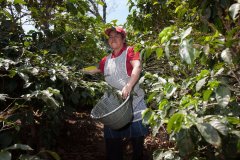
A cup of Fairtrade coffee gives coffee farmers in Central and South America a democratic dream.
Professional baristas exchange please pay attention to coffee workshop (Wechat official account cafe_style) Fair Trade is a consumer movement initiated by European and American non-profit organizations. Fifty or sixty years ago, they felt that bananas, coffee and other bulk substances that had been widely used in their lives for a long time came from poor third World countries, but the wages of local farmers were far lower than the poverty line, so they initiated their own initiative.
Coffee bean producing area-Central America-Honduras (Honduras)
Well-known representative coffee: Honduran coffee seems strange to many coffee drinkers. When it comes to coffee production, the geographical conditions of Honduras are no less than those of neighboring coffee-producing countries such as Guatemala and Nicaragua. However, in the past, Honduras was more well-known in the consumer market because it did not have strong support in the handling and transportation of raw beans.

Coffee producing area | Belize coffee producing area introduces the flavor characteristics of Belize coffee in Central America.
Belize is a Central American country located between Mexico in the north, Guatemala in the west and south, and the beautiful Caribbean Sea in the east. Belize coffee is grown organically under the canopy of the rainforest at Gulong Water Pot Manor in the western plateau of Belize. The estate covers an area of 130000 acres and includes cattle, corn, orchards, wildlife and tourist attractions. Fertilizer
The protagonist of the coffee myth in Latin America, Central America and the Caribbean
When it comes to Jamaica, we immediately think of "Blue Mountain" coffee. Rare and expensive true blue mountain beans, originally from the Wallensford Coffee Garden, have now been expanded to the Blue Mountains with an altitude of more than 1000 meters. As long as the tree species and treatment procedures of the manor meet certain standards, the government will issue a guarantee to allow the use of the name "Blue Mountain".

The protagonist of the coffee myth in Latin America, Central America and the Caribbean
When it comes to Jamaica, we immediately think of "Blue Mountain" coffee. Rare and expensive true blue mountain beans, originally from the Wallensford Coffee Garden, have now been expanded to the Blue Mountains with an altitude of more than 1000 meters. As long as the tree species and treatment procedures of the manor meet certain standards, the government will issue a guarantee to allow the use of the name "Blue Mountain".

Costa Rica, the first country in Central America to grow coffee, grows youdao.
For more information on coffee beans, follow the Coffee Workshop (official Wechat account cafe_style), the first country in Central America to grow coffee; government support for development began in Costa Rica in 1729, when it was introduced from Cuba. This made Costa Rica the first country in Central America to grow coffee and the first to grow coffee because of its commercial value.

The flavor and taste of Honduran coffee from Central and South America.
Professional coffee knowledge exchange more coffee bean information please follow the coffee workshop (Wechat official account cafe_style) Honduras was previously less well-known in the consumer market due to the lack of strong support in the handling and transportation of raw beans. In recent years, the roasting countries have actively changed and expanded the coffee industry, which has gradually opened up the international popularity of coffee from Honduras. Flood

An introduction to Costa Rica A description of the common varieties of Kaddura and Kaduai in American beans
Costa Rica, located in Central America, is the country where coffee was first introduced into Central America. It has a long history and has a complete coffee organization system from production to marketing. Because it is located in the Central American Isthmus, the volcanic soil is very fertile and the drainage is good, especially in the central plateau CentralPlateau, where the coffee growing land is stable due to the fertile volcanic ash and mild and suitable temperature of the volcanic terrain.

Coffee bean producing areas-Central America-Honduras
Well-known representative coffee: Honduran coffee seems strange to many coffee drinkers. When it comes to coffee production, the geographical conditions of Honduras are no less than those of neighboring coffee-producing countries such as Guatemala and Nicaragua. However, in the past, Honduras was more well-known in the consumer market because it did not have strong support in the handling and transportation of raw beans.

A brief introduction to the Market Price of Honduras Fine Coffee Bean varieties in Central America
Honduran coffee comes from El Salvador. At first coffee production was in a state of unavoidable heat until the frost in Brazil in 1975. At that time, Brazil was hard hit and coffee production plummeted, while Honduras took the opportunity to take advantage of the surge in coffee production from 500000 bags to 1.8 million bags and was ransacked. It was only after that that coffee production in Honduras really developed. Now, Honduran coffee.

World Coffee Map-- A Collection of Information on Coffee producing areas in Central America and Honduras
For professional baristas, please pay attention to the coffee workshop (Wechat official account cafe_style) Honduras was not well known in the consumer market because of its lack of strong support in the handling and transportation of raw beans. In recent years, Hongguo has actively changed and expanded the coffee industry, which has gradually opened up the international popularity of Honduran coffee. Honduras harvests three hundred a year
World Fine Coffee Producing Areas Central America Honduras Producing Areas Coffee Bean Characteristics
Famous representative coffee: honduran coffee seems strange to many coffee drinkers. Honduras is no less geographically well-placed to produce coffee than its coffee-producing neighbours, such as Guatemala and Nicaragua. Honduras, however, had a relatively high profile in the consumer market because it did not have strong support for raw bean handling and transportation.

Coffee from Central and South America, the birthplace of Ethiopian coffee
Coffee trees come from Ethiopia, from wild coffee forests and semi-developed land to traditionally operated plots of land to modern plantations. About 50% of the coffee is grown more than 1500 meters above sea level. The flavor of Ethiopian coffee is difficult to describe. It is neither strong nor sour. Therefore, it is not suitable for deep baking, otherwise it is easy to lose.

Description of Latin American coffee flavor, introduction of Latin American coffee
The characteristics of the flavor of Central and South America: balanced, moderately sour and mellow Central and South America is the world's largest coffee producing area, where there are numerous boutique coffees. Take Colombia, Guatemala or Brazil as an example, good coffee is enough to make people dazzling. What is the resource advantage that makes Central and South America so good? French naval officer Gabriel Ma in 1721

A brief introduction to the planting Market Price of Fine Coffee Bean varieties in Tian Chi Manor
Nicaragua is now one of the poorest countries in Central America. Due to its poor economic foundation, the coffee industry is still relatively backward, while coffee farmers are in extreme poverty. Fortunately, Nicaraguan coffee has received some foreign aid funds to improve the quality of its coffee. Coffee from Madagelba, Sinodega and Segovia in Nicaragua

Introduction to the world's three major coffee producing areas: American coffee estates and detailed explanation of coffee from each producing area
Coffee production in the Americas refers to Central America and South America, and the areas north of Mexico are basically non-producing coffee beans. Coffee production in the Americas is mainly distributed in the Tropic of Cancer to the equator, and several countries in Central America are basically coffee producing countries. Brazil, located in South America, is the world's largest coffee producer. Just like the spread of coffee, it cannot be separated from the era of great navigation.